Why Chainlink Matters
Blockchains have a simple but fundamental limitation.
They cannot naturally read information from the outside world.
A smart contract can execute deterministic code with perfect reliability, but it cannot independently know:
- the price of ETH
- the USD interest rate
- the value of a stock index
- whether a reserve actually exists in a bank account
From the perspective of traditional computing, this is an unusual constraint. In most software environments, external data feeds are trivial to integrate. But blockchains deliberately isolate themselves from the outside world to preserve determinism and security.
That isolation creates what is known as the oracle problem.
If blockchains cannot access real-world data, they cannot support most real-world financial applications.
This is where oracle networks enter the picture.
Oracles are systems that fetch external data, verify its accuracy, and deliver it to smart contracts in a trustworthy way.
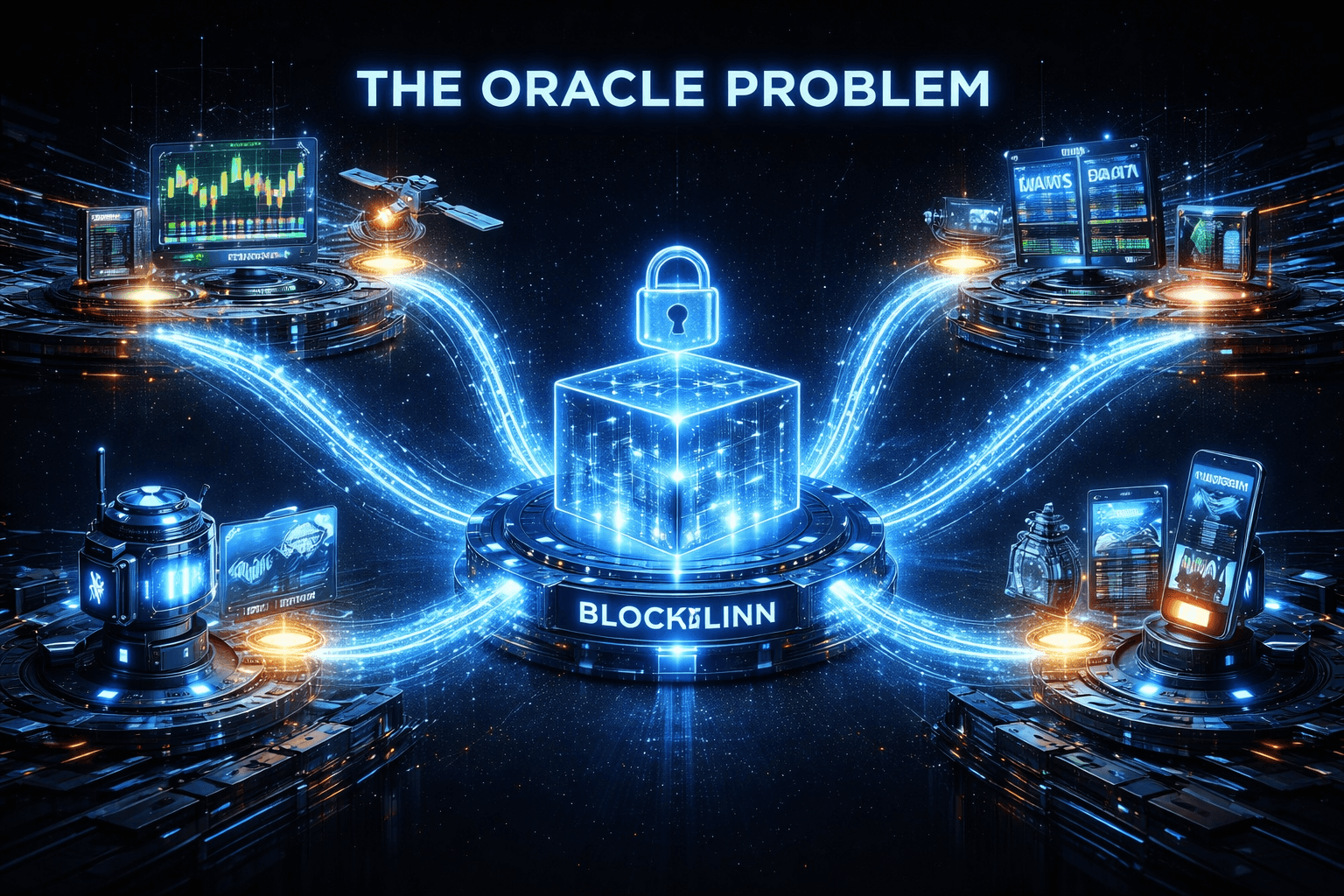
Among all oracle networks that have emerged over the past decade, Chainlink has become the dominant infrastructure layer powering this function.
Today, a significant portion of decentralized finance relies on Chainlink’s data feeds to operate safely. Liquidations, collateral valuations, derivatives pricing, and automated financial contracts all depend on accurate price feeds.
Without reliable oracles, DeFi simply cannot function.
For this reason, Chainlink is often described in a single sentence:
Chainlink is the data layer of the blockchain economy.
The economic value secured by this infrastructure is enormous.
According to multiple research dashboards and oracle analytics platforms, Chainlink secures the largest Total Value Secured (TVS) across oracle networks.
In practical terms, this means:
Billions of dollars in DeFi assets rely on Chainlink data feeds to verify prices and trigger financial logic.
But the Chainlink story is no longer just about DeFi.
Over the past two years, the narrative surrounding the project has expanded dramatically.
Three themes now define the bull case for Chainlink:
- Oracle dominance
- CCIP (cross-chain communication infrastructure)
- RWA – tokenized real-world assets
When these narratives converge, Chainlink’s role begins to look much larger than an oracle network.
It starts to resemble something closer to financial infrastructure for the internet of value.
Protocol Overview
How Chainlink Works
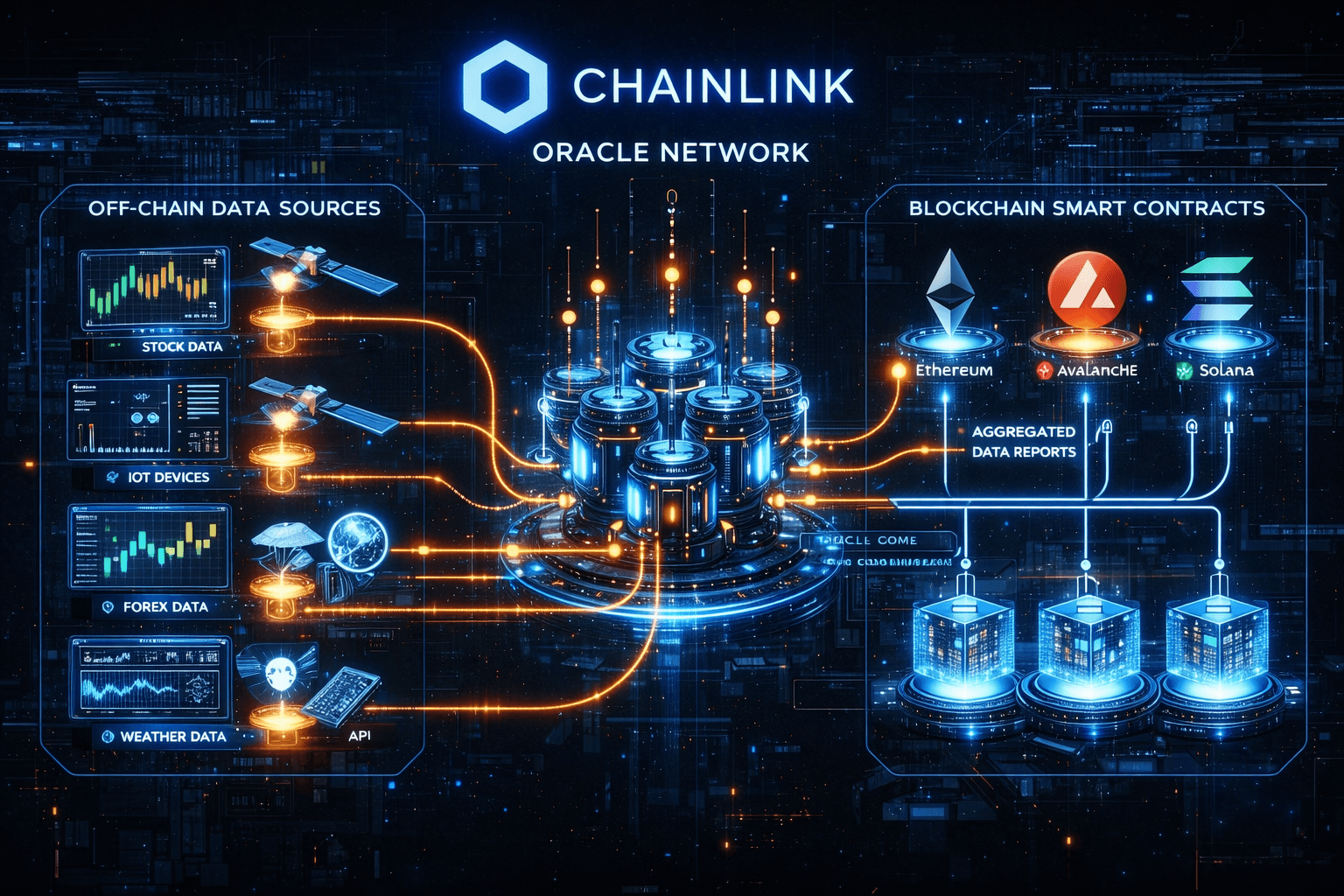
At its core, Chainlink is a decentralized network of oracle nodes.
These nodes perform a multi-step process designed to bring external data onto blockchains securely.
The process typically looks like this:
- Nodes collect data from off-chain sources
- Multiple nodes verify the data independently
- The network reaches consensus on the correct value
- The verified result is delivered to a smart contract
This architecture reduces reliance on any single data provider.
Instead of trusting one centralized API, smart contracts receive aggregated data verified by multiple independent operators.
Node operators that participate in the network are compensated using the LINK token, which serves as the economic coordination layer of the system.
Over time, Chainlink has refined its architecture to improve efficiency and scalability.
One of the most important innovations is called Off-Chain Reporting (OCR).
Off-Chain Reporting (OCR)
Traditional oracle systems require every node to submit its own transaction on-chain.
This approach quickly becomes expensive as networks scale.
Chainlink’s OCR model changes the workflow.
Instead of broadcasting individual updates to the blockchain, nodes first coordinate off-chain.
They aggregate their data, reach consensus, and produce a single final report.
Only the final report is then submitted on-chain.
This design dramatically improves efficiency.
It reduces gas costs while allowing the network to update data more frequently.
For applications that rely on constant price updates — such as lending protocols or derivatives platforms — this improvement is critical.
OCR is one of the reasons Chainlink has been able to scale its oracle infrastructure across dozens of networks.
Chainlink’s Product Suite
Over time, Chainlink has evolved far beyond a simple price oracle provider.
The network now offers a broad set of services designed to solve different data and automation problems within decentralized systems.
These products form the foundation of Chainlink’s expanding ecosystem.
Data Feeds
The most widely used Chainlink product is price data feeds.
These feeds provide reliable market prices for assets across multiple blockchains.
Major DeFi protocols rely on these feeds to determine:
- collateral values
- liquidation thresholds
- derivatives settlement prices
Examples of protocols that use Chainlink price feeds include major lending and derivatives platforms across multiple chains.
For these applications, price accuracy is critical.
Even small pricing errors can cause cascading liquidations or protocol insolvency.
Chainlink’s reputation for reliability has made its feeds the default oracle solution for much of the DeFi ecosystem.
Proof of Reserve
One of the biggest challenges in crypto is verifying whether assets actually exist where they claim to exist.
Wrapped assets, tokenized funds, and stablecoins often represent off-chain collateral.
Without transparency, users must rely entirely on trust.
Chainlink’s Proof of Reserve system addresses this issue.
The system continuously verifies whether underlying reserves are present and sufficient.
This can be used for:
- wrapped assets such as tokenized Bitcoin
- stablecoin collateral verification
- tokenized funds and ETFs
- real-world asset tokenization systems
Proof of Reserve plays a particularly important role in the emerging RWA ecosystem, where on-chain tokens represent off-chain financial assets.
Automation (Formerly Keepers)
Smart contracts are deterministic but passive.
They cannot execute themselves without an external trigger.
Chainlink Automation solves this limitation.
It allows contracts to execute automatically when predefined conditions are met.
Examples include:
- automatic liquidation triggers
- yield farming reward distribution
- rebasing token supply adjustments
- DAO governance actions
This transforms smart contracts from static code into fully automated financial infrastructure.
Verifiable Random Function (VRF)
Randomness is surprisingly difficult to generate on blockchains.
Most deterministic systems cannot produce truly unpredictable values without introducing security risks.
Chainlink’s VRF (Verifiable Random Function) provides provably fair randomness that can be verified on-chain.
This feature is widely used in:
- NFT mint distributions
- blockchain gaming
- lottery systems
- randomized reward mechanics
For gaming and NFT ecosystems, VRF has become an essential primitive.
Data Streams
Traditional oracle feeds update on fixed intervals.
But trading platforms often require ultra-low latency data.
Chainlink’s Data Streams product is designed for high-frequency trading environments where faster updates are required.
These streams deliver real-time data feeds optimized for decentralized exchanges and derivatives platforms.
As on-chain trading infrastructure grows more sophisticated, demand for these lower latency feeds continues to increase.
CCIP: Chainlink’s Biggest Expansion
Perhaps the most ambitious part of Chainlink’s roadmap is the Cross-Chain Interoperability Protocol (CCIP).
To understand why this matters, we need to understand the fragmentation problem in crypto.
Today the blockchain ecosystem is highly fragmented.
Hundreds of networks exist across the industry:
- Ethereum
- Arbitrum
- Base
- Avalanche
- Solana
- BNB Chain
Each network operates as its own isolated system.
Assets and data cannot move seamlessly between them.
To solve this issue, cross-chain bridges were introduced.
Unfortunately, bridges have historically been one of the weakest points in crypto security.
Some of the largest hacks in crypto history have targeted bridge infrastructure.
CCIP attempts to build a secure messaging standard between blockchains.
Rather than relying on fragile bridge designs, CCIP enables networks to send:
- messages
- data
- tokens
between chains using Chainlink’s oracle network.
If CCIP becomes widely adopted, it could significantly expand the economic role of the Chainlink network.
Every cross-chain transaction would rely on oracle nodes.
This could increase:
- node operator revenue
- staking rewards
- demand for LINK tokens
In other words, CCIP transforms Chainlink from an oracle provider into interoperability infrastructure for the entire multi-chain ecosystem.
Oracle Dominance
One of Chainlink’s biggest advantages is its network effect.
In decentralized finance, trust is everything.
When a new protocol launches, choosing an oracle provider becomes a critical decision.
The key question developers ask is simple:
Has this system ever failed?
Has it ever been hacked?
Chainlink’s strongest competitive advantage is its track record.
After years of production usage, the network has developed:
- a large and diverse node operator ecosystem
- an extensive security history
- deep integration across DeFi protocols
As a result, Chainlink has become the default oracle infrastructure across much of the industry.
Most new DeFi protocols follow a simple rule:
Choose the most battle-tested oracle.
In many cases, that means choosing Chainlink.
This creates a powerful network effect.
The more protocols that use Chainlink, the more trust the network accumulates.
And the more trust it accumulates, the more likely new protocols are to adopt it.
The Bull Market Narrative
Over the past cycle, Chainlink’s investment thesis has expanded beyond oracle dominance.
Three macro narratives now drive investor attention.
These narratives are shaping how the market thinks about the long-term role of Chainlink.
Narrative 1: Real-World Asset Tokenization
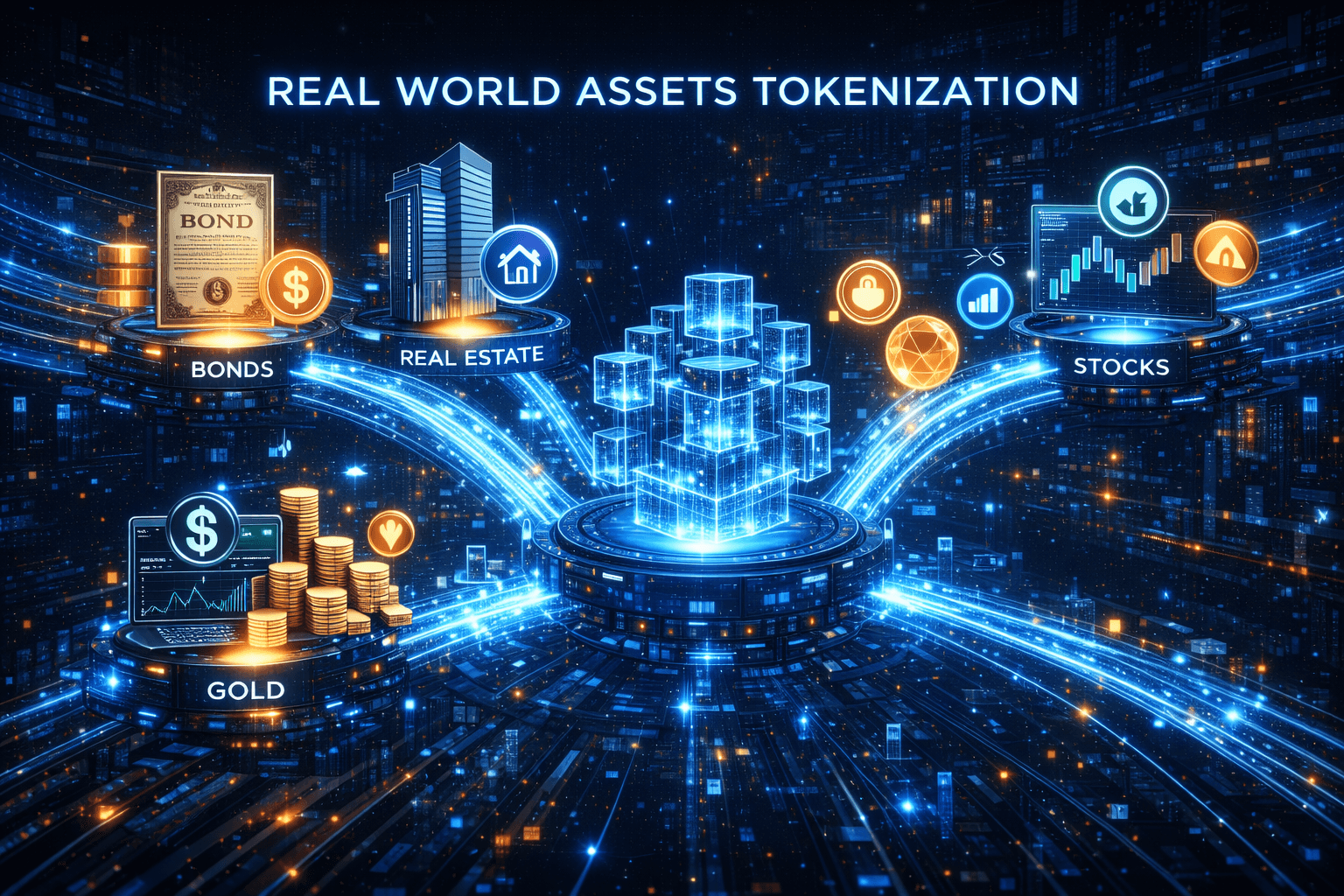
One of the most powerful emerging narratives in crypto is RWA — Real World Assets.
The idea is simple.
Traditional financial assets could eventually be represented as tokens on blockchains.
These assets may include:
- government bonds
- real estate
- gold
- ETFs
- equities
- private credit funds
Some industry forecasts suggest that tokenized assets could eventually represent trillions of dollars of value on-chain.
But bringing real-world assets onto blockchains creates several new technical challenges.
Three problems appear immediately:
- Reliable price data
- Proof that reserves actually exist
- Cross-chain data communication
All three require oracle infrastructure.
This is exactly where Chainlink becomes essential.
The network’s product stack already addresses these requirements through:
- Data Feeds
- Proof of Reserve
- CCIP
- Data Streams
Because of this, some analysts describe Chainlink as:
“The data infrastructure for tokenized finance.”
If the RWA thesis plays out, Chainlink could become a critical bridge between traditional finance and decentralized systems.
Narrative 2: CCIP as a Cross-Chain Standard
The multi-chain world is becoming increasingly complex.
Dozens of blockchains compete for liquidity, developers, and users.
But without reliable communication between networks, liquidity remains fragmented.
CCIP attempts to solve this fragmentation by providing a secure messaging layer.
If CCIP becomes widely adopted, Chainlink could play a role similar to the TCP/IP protocol layer of financial blockchains.
Instead of just delivering price data, Chainlink would facilitate:
- cross-chain asset transfers
- cross-chain contract execution
- cross-chain financial messaging
This dramatically expands the scope of the protocol.
Narrative 3: Institutional Adoption
Over the past few years, Chainlink has quietly worked with several large institutions on pilot programs.
These collaborations explore how traditional financial institutions might interact with tokenized assets on blockchain infrastructure.
Some experiments have involved testing:
- tokenized asset settlement
- cross-chain financial messaging
- institutional data verification
If banks begin adopting tokenization frameworks at scale, several infrastructure problems must be solved simultaneously:
- data verification
- compliance systems
- reserve transparency
- secure cross-chain communication
Chainlink’s product suite directly targets these challenges.
For this reason, some research reports describe Chainlink as:
“The connective layer between on-chain and off-chain finance.”
Tokenomics
Compared to many altcoins, Chainlink’s token economy is relatively straightforward.
The total supply of LINK is capped at:
1 billion tokens.
The token serves several roles within the network:
- payments for oracle services
- staking for network security
- node operator incentives
- governance participation (future potential)
Protocols that use Chainlink’s oracle services pay node operators using LINK.
This creates a direct economic loop between network usage and token demand.
However, the effectiveness of this value capture mechanism has been one of the most debated topics among investors.
Staking
Chainlink introduced its staking system with the release of Staking v0.2.
The updated model includes several key features:
- maximum capacity of 45 million LINK
- slashing penalties for malicious behavior
- unbonding periods
- participation from both node operators and community stakers
Staking is designed to increase the economic security of the oracle network.
Participants who stake LINK help secure data feeds and earn rewards in return.
As staking participation grows, a larger portion of the token supply becomes locked.
This could gradually reduce circulating liquidity.
Value Capture
One of the most common investor debates around Chainlink centers on a simple question.
If Chainlink is used everywhere, why hasn’t LINK captured more value historically?
For years, critics argued that oracle usage did not translate directly into token demand.
That critique had some validity.
But new mechanisms are beginning to change the equation.
These include:
- Payment abstraction systems
- Service Value Return (SVR) mechanisms
- staking reward models
- reserve systems
According to several DeFi analytics dashboards, Chainlink services currently generate tens of millions of dollars in annual fees.
Over time, these fees may increasingly flow into the LINK ecosystem through staking rewards and service payments.
However, the process is gradual.
Infrastructure networks often take longer to reflect their economic importance in token price.
For this reason, some investors view LINK as a slow-repricing infrastructure asset.
Part 1 Summary
The investment thesis around Chainlink is built on three core narratives:
- Oracle dominance across DeFi
- CCIP as a cross-chain messaging standard
- Infrastructure for tokenized real-world assets
If these narratives converge, Chainlink’s role could evolve far beyond its original oracle function.
Instead of being a DeFi utility network, Chainlink could become something much larger:
The data and communication layer of the blockchain economy.
But the realization of this vision depends on adoption.
And adoption in crypto rarely follows a straight line.
Chainlink: The Data Layer of the Blockchain Economy
Part 2 — On-Chain Signals, Competition, Supply Dynamics, and Market Scenarios
In Part 1, we explored the structural thesis behind Chainlink: its dominance in oracle infrastructure, the strategic importance of CCIP, and the growing narrative around real-world asset tokenization.
But narratives alone do not determine the long-term value of a crypto protocol.
Serious investors eventually return to a more grounded question:
Is the network actually being used?
To answer that, we need to look at usage metrics, competitive dynamics, token supply mechanics, and market structure.
Only by combining these signals can we begin to build a realistic valuation framework for LINK.
On-Chain Metrics — What Real Usage Suggests
When analyzing infrastructure protocols in crypto, traditional metrics like daily active users are often misleading.
Oracle networks operate differently from consumer applications.
Instead of measuring individual users, investors focus on secured value and protocol integrations.
Several metrics are commonly used to measure oracle network adoption:
- Total Value Secured (TVS)
- number of protocol integrations
- oracle update frequency
- network fee generation
- usage across different blockchains
Among these metrics, Total Value Secured is the most widely cited.
TVS measures how much economic value relies on a given oracle network.
For example, when a lending protocol uses an oracle to determine collateral prices, the entire lending system effectively depends on that oracle’s reliability.
According to multiple oracle analytics dashboards, Chainlink continues to dominate the market in TVS.
Estimated oracle market share currently looks roughly like this:
Oracle NetworkTVS Market Share
Chainlink
~75%
Chronicle
~10%
RedStone
~8%
Pyth
~7%
This distribution highlights an important reality.
Despite increasing competition, Chainlink remains the dominant oracle infrastructure across DeFi.
However, TVS alone does not capture the full picture.
Some oracle systems specialize in high-frequency data updates rather than securing large amounts of value.
Trading-focused protocols, particularly those operating on high-throughput chains, often require extremely low-latency data.
This has created a second axis of oracle competition.
Today the oracle market is effectively divided into two strategic segments:
Security-optimized oracles
These prioritize reliability and long-term protocol safety.
Chainlink dominates this category.
Latency-optimized oracles
These focus on speed and frequent updates for trading applications.
Protocols like Pyth are particularly strong in this segment.
Understanding this distinction is important for investors.
Chainlink’s dominance lies in trust, reliability, and integration depth, not necessarily raw update frequency.
Why LINK Often “Pumps Late” in Market Cycles
One of the recurring questions among Chainlink investors is simple.
If the network is used everywhere, why does LINK often move later in bull markets?
Several structural reasons help explain this pattern.
1. Supply Dynamics
The maximum supply of LINK is fixed at 1 billion tokens.
However, the circulating supply has gradually increased over time.
Historically, Chainlink token distributions from treasury allocations and ecosystem funding have introduced additional supply into the market.
In documentation and research discussions, analysts often estimate effective token release dynamics around mid-single-digit annual supply growth.
This creates a psychological overhang for investors.
Even if demand grows, the expectation of new supply entering the market can dampen short-term price momentum.
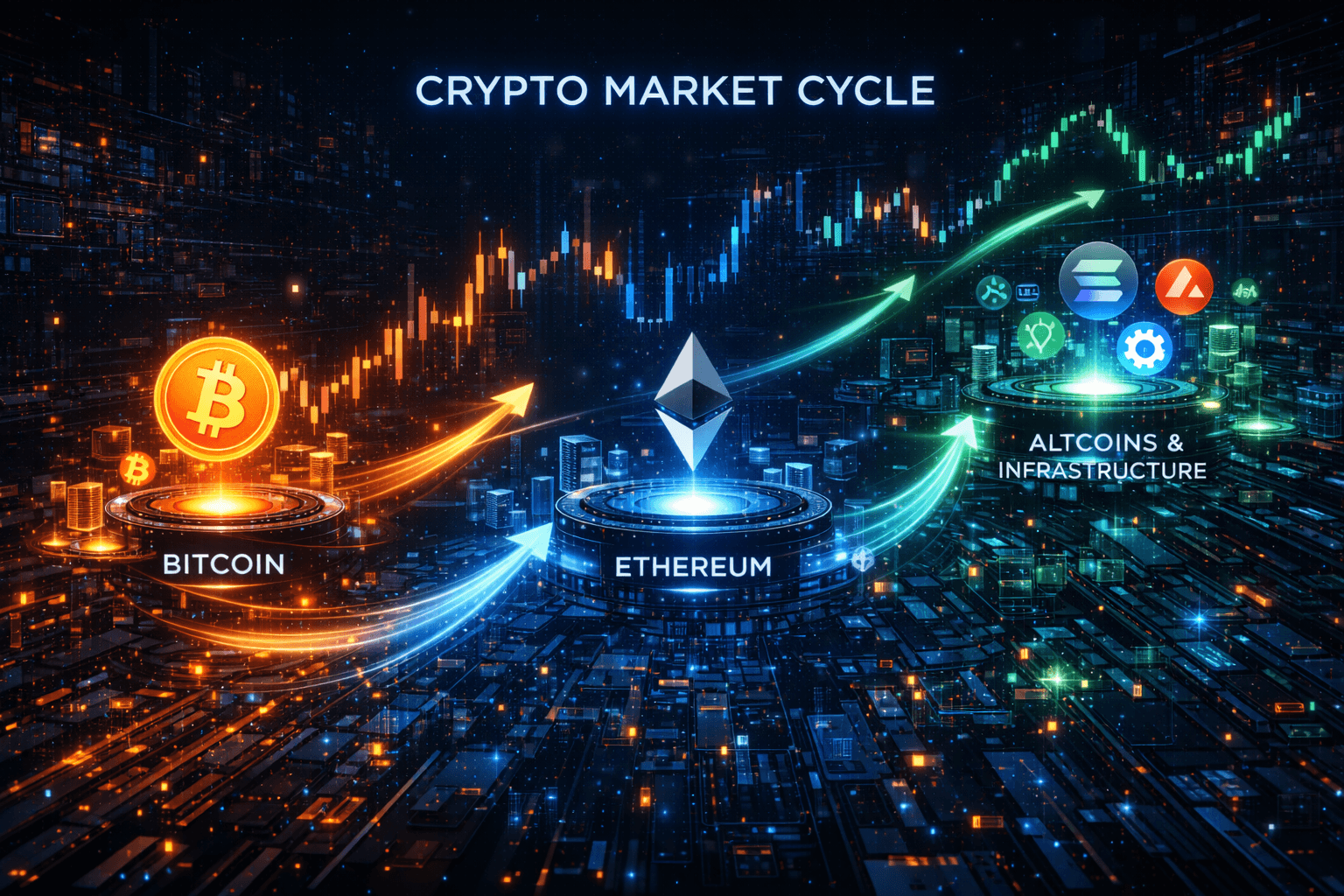
2. Infrastructure Rotation
Crypto market cycles often follow a predictable capital flow pattern.
Capital tends to move in phases:
- Bitcoin leads the cycle
- Ethereum follows
- new L1 narratives emerge
- speculative sectors accelerate
- infrastructure projects reprice later
Chainlink belongs firmly in the infrastructure category.
In traditional markets, these would be comparable to companies selling picks and shovels during a gold rush.
Infrastructure assets often lag early speculation but benefit strongly once ecosystem usage expands.
Historically, LINK has exhibited this pattern several times across market cycles.
3. Slow Value Accrual
For years, critics of Chainlink argued that the network’s success did not translate directly into token demand.
The criticism was straightforward:
Protocols used Chainlink services, but that usage did not necessarily require holding large amounts of LINK.
Recognizing this issue, the Chainlink ecosystem has gradually introduced new mechanisms designed to strengthen value capture.
These include:
- staking rewards tied to network usage
- Service Value Return (SVR)
- payment abstraction systems
- reserve mechanisms for network services
These mechanisms are still evolving.
Unlike speculative tokens, infrastructure networks often require time before their economic value becomes fully visible in token markets.
This is why some investors describe LINK as a slow-repricing infrastructure asset.
Competitive Landscape — The Oracle Wars
For many years Chainlink operated in a relatively uncontested niche.
That is no longer the case.
Several new oracle networks have emerged with different architectural approaches.
The most notable competitors today include:
- Pyth Network
- RedStone
- Chronicle
Each takes a different approach to solving the oracle problem.
Chainlink Architecture
Chainlink primarily operates using a push-based oracle model.
Nodes regularly submit updated data to blockchains at predefined intervals.
Advantages include:
- battle-tested security
- deep DeFi integration
- large and decentralized node operator network
- extensive product ecosystem
The main drawback is cost.
Because updates are pushed on-chain regularly, the model can sometimes be more expensive than pull-based alternatives.
Pyth Network
Pyth operates using a pull-based oracle architecture.
Instead of constantly pushing updates on-chain, data is requested when needed.
This reduces costs and allows applications to fetch data exactly when required.
Pyth has been particularly successful in ecosystems with high-frequency trading activity.
Advantages include:
- extremely low latency
- strong presence in trading applications
- optimized for high-throughput chains
However, Pyth’s ecosystem is still smaller than Chainlink’s.
RedStone
RedStone introduces a modular oracle architecture.
Data collection and data delivery are separated into different components.
This design allows developers to customize how data is delivered depending on the needs of their application.
Advantages include:
- flexible integration models
- lower operational costs
- support for long-tail assets
The modular design has attracted a growing number of integrations across DeFi.
Oracle Competition Scorecard
A simplified comparison between major oracle providers highlights where each network currently excels.
Category Chainlink Pyth RedStone
Security 5 4 4
Latency 4 5 4
Cost 3 5 5
Ecosystem Integrations 5 4 4
Product Breadth 5 3 3
The takeaway is relatively clear.
Chainlink still leads in security, integrations, and product scope.
But competitors are gaining ground in latency and cost efficiency, particularly for trading-focused use cases.
The oracle wars are no longer hypothetical.
They are actively unfolding.
Supply Pressure and Unlock Dynamics
Understanding LINK’s supply structure is critical when evaluating long-term price behavior.
Several sources of potential supply pressure exist:
- treasury allocations
- node operator rewards
- staking participation dynamics
- exchange inflows
Today, the circulating supply of LINK is estimated to be over 700 million tokens.
This means the majority of total supply is already in circulation.
Compared to many altcoins with aggressive unlock schedules, LINK’s supply profile is relatively mature.
However, investors still watch several indicators closely.
These include:
- treasury wallet transfers
- exchange netflows
- staking participation levels
- derivatives open interest
Large transfers from treasury addresses occasionally spark speculation about potential sell pressure.
While these events do not always indicate market selling, they remain a factor that traders monitor.
Market Structure — Derivatives and Liquidity
LINK has developed a deep derivatives market across major exchanges.
This creates additional signals that investors can analyze.
One common pattern observed in LINK markets is open interest accumulation without immediate price movement.
In practice, this often looks like:
Open interest increases
Price moves sideways
Funding rates remain neutral
This pattern typically indicates position accumulation.
If leveraged positions build while spot supply remains stable, the market can eventually enter a volatility expansion phase.
Historically, LINK has experienced several strong rallies following prolonged periods of open-interest compression.
While derivatives markets do not determine price direction on their own, they provide valuable context for market positioning.
Valuation Thinking — How Investors Approach LINK
Valuing infrastructure tokens is inherently difficult.
Unlike traditional equities, many crypto networks do not distribute cash flows directly to token holders.
However, several frameworks can still provide useful insights.
TVS-Based Valuation
One model compares fully diluted valuation to Total Value Secured.
TVS represents the economic value relying on an oracle network.
A large gap between TVS and network valuation can indicate that infrastructure is underpriced relative to its systemic importance.
However, this model assumes that value will eventually accrue to the token.
That assumption remains debated.
Revenue Multiple Analysis
Chainlink services currently generate tens of millions of dollars in annual fees.
Compared to traditional infrastructure companies, this revenue base is still small relative to the protocol’s market capitalization.
But growth expectations are what matter.
If CCIP, RWA adoption, and cross-chain infrastructure expand significantly, revenue could scale with network usage.
Network Usage Model
A longer-term valuation framework focuses on several structural drivers:
- number of oracle integrations
- CCIP transaction volume
- RWA data demand
- LINK tokens locked in staking
If these metrics grow simultaneously, token demand could increase alongside network usage.
Brutally Honest Risks
Even strong infrastructure projects face meaningful risks.
For Chainlink, several structural concerns remain.
Oracle Competition
Competitors like Pyth and RedStone are improving rapidly.
If faster and cheaper oracle systems capture trading-focused markets, Chainlink’s dominance could gradually erode.
Token Value Capture
The long-standing critique remains relevant.
Network usage does not automatically translate into token demand.
Value capture mechanisms are improving, but they are not fully proven yet.
Altcoin Liquidity Cycles
LINK’s price performance is still heavily influenced by broader altcoin market conditions.
If Bitcoin dominance remains elevated for long periods, infrastructure tokens can struggle to outperform.
Regulation
Oracle networks interact with financial data.
If regulators begin imposing restrictions on financial data providers or node operators, compliance requirements could increase.
While this risk remains speculative, it is worth monitoring.
2026–2027 Market Scenarios
The long-term trajectory of LINK will depend heavily on macro crypto adoption and the success of several key narratives.
Below are simplified scenario models investors often discuss.
Bear Scenario
Conditions:
- weak altcoin cycle
- slow DeFi growth
- limited RWA adoption
Possible price range:
$10 – $20
In this environment, Chainlink remains widely used but struggles to attract speculative capital.
Base Scenario
Conditions:
- moderate DeFi expansion
- steady CCIP integrations
- gradual RWA adoption
Possible price range:
$30 – $55
Many analysts consider this the most realistic scenario for the next major cycle.
Strong Bull Scenario
Conditions:
- Bitcoin above $120K
- significant DeFi expansion
- CCIP becomes widely used cross-chain infrastructure
- institutional tokenization accelerates
Possible price range:
$65 – $90+
In this scenario, Chainlink becomes one of the primary infrastructure plays of the cycle.
Ultra Bull Scenario
This scenario assumes a structural shift in global finance.
Conditions include:
- large financial institutions tokenizing securities
- widespread adoption of blockchain settlement
- Chainlink becoming the default oracle and messaging layer
Under these conditions, Chainlink’s market capitalization could potentially reach:
$40B – $60B+
This would imply a price above $100 per LINK.
However, such outcomes are typically discussed in longer time horizons approaching 2030.
Final Thoughts
Chainlink is one of the oldest and most battle-tested infrastructure projects in crypto.
Unlike many narratives driven by short-term hype, the investment thesis behind Chainlink is fundamentally rooted in infrastructure demand.
The protocol sits at the intersection of several powerful trends:
- decentralized finance
- cross-chain interoperability
- tokenized real-world assets
If these trends continue expanding, Chainlink could evolve into a foundational layer of the blockchain economy.
But investors should remain realistic.
Infrastructure narratives often take years to fully materialize.
And even dominant networks face competition, regulatory uncertainty, and shifting market cycles.
The long-term Chainlink thesis ultimately depends on three questions:
- Will real-world assets move on-chain?
- Will cross-chain infrastructure become standardized?
- Will oracle networks remain a critical piece of financial infrastructure?
If the answer to those questions is yes, Chainlink may end up playing a much larger role in the future of global finance than many investors currently realize.


